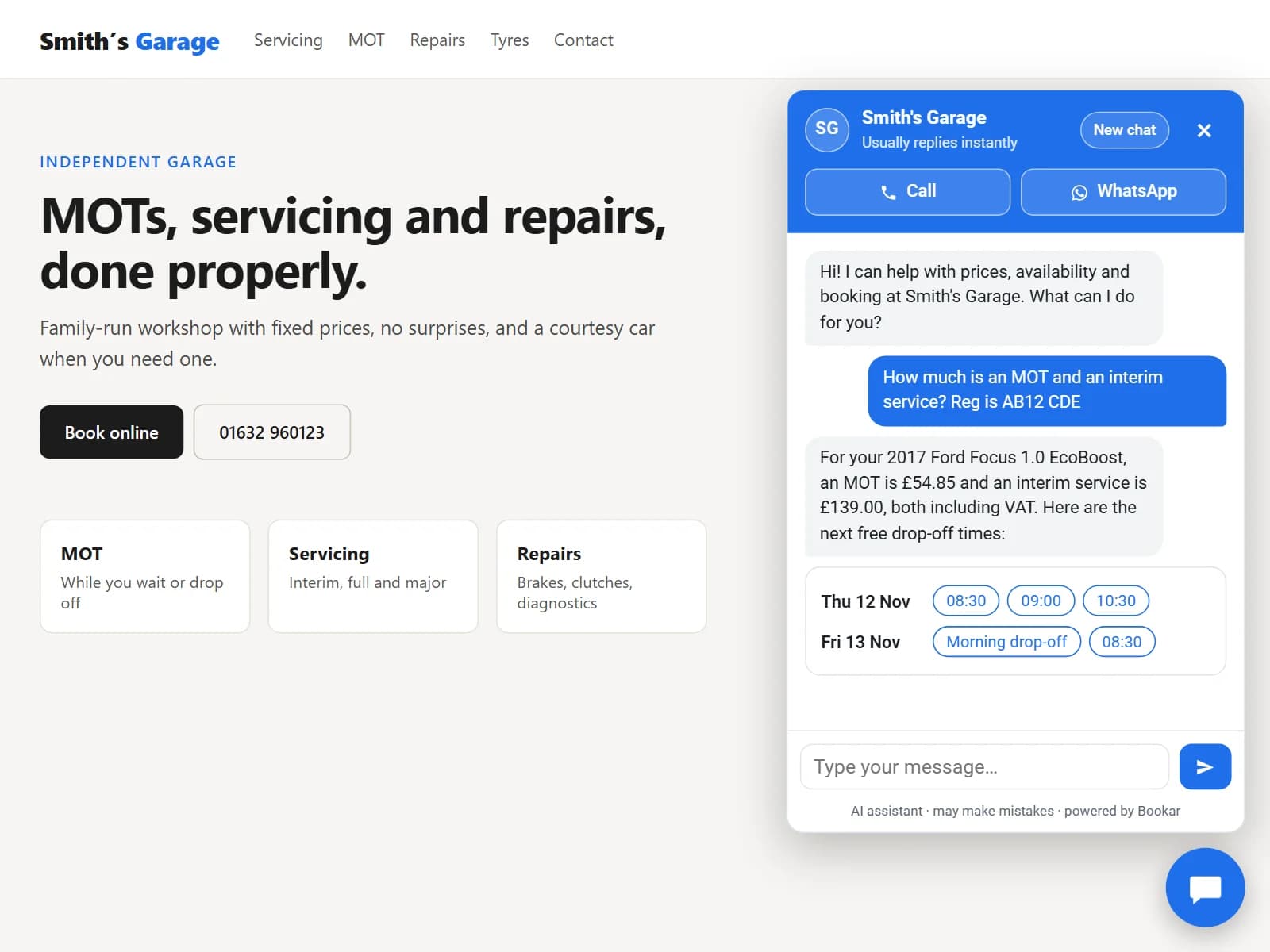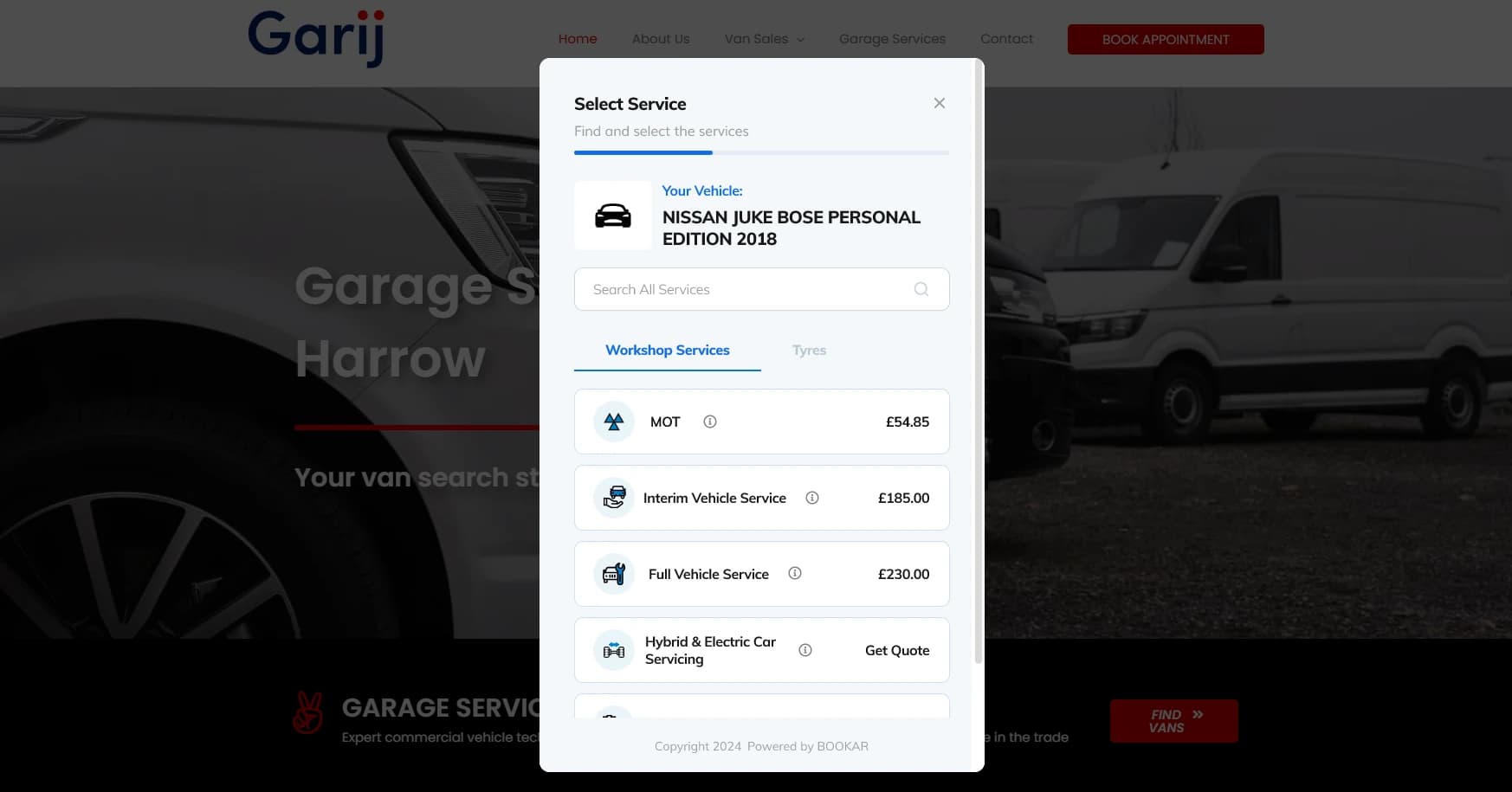
Every November the same thing happens. The roads get wet, the mornings get dark, and drivers who have ignored a tyre advisory since the spring finally look at their tread. Most of them start with a search, not a phone call. If your website shows a fitted price and a fitting slot, you get the booking. If it shows a phone number and “call for prices”, plenty of them buy from an online tyre retailer instead.
Meanwhile there are tyres on your rack that you paid for months ago. Selling those online first is the easiest margin in the building.
What a customer needs to see before they buy
- The right sizes for their car, from their registration — not a size they have to read off the sidewall in the dark.
- One price per tyre, fitted, including VAT. Fitting, valves and disposal added at the end feel like a trick, even when they are not.
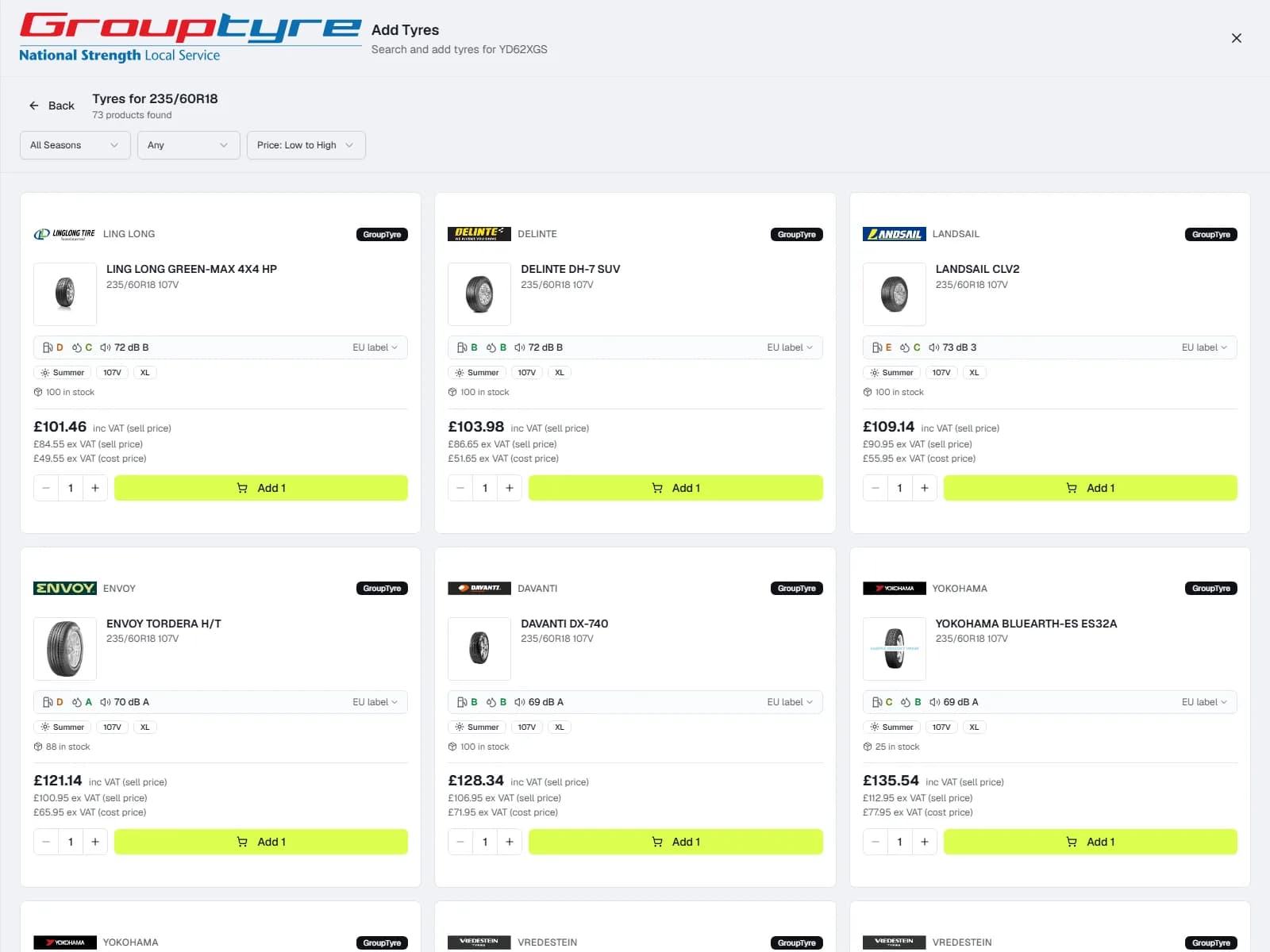
- The label grades — fuel efficiency, wet grip and noise — plus the season and whether it is a run-flat.
- A fitting slot they can pick there and then.
- A confirmation that says what they bought and when to come in.
The label grades are not just a nice extra. The UK tyre labelling rules expect buyers to be shown them before they buy, online as well as in the shop, and on the invoice. BOOKAR's garage websites show each tyre's fuel, wet grip and noise grades beside its fitted price, and the invoice prints them under every tyre line.
Sell your own stock first
A tyre on your rack is cash you have already spent. Selling it online before you order another from a supplier means no delivery to wait for, no supplier price change between the quote and the order, and a rack that turns over instead of collecting slow sizes.
In BOOKAR, Settings → Appointment → Online Booking Options can show the location's own in-stock tyres on your website and booking widget, priced exactly as a work order would bill them. When a tyre is available from your stock and from a supplier, the customer sees it once — from your stock. And if you would rather sell only what you hold, you can leave supplier tyres off and sell your stock alone.
Then fill the gaps from your suppliers
Your rack will never cover every size, and it should not try. For the rest, your website should sell from your suppliers' stock at your prices, so a customer can book a tyre you do not hold and it arrives before they do.
BOOKAR can sell online from any of GroupTyre, Furrows, Bonds and Eden Tyre Sales at once, chosen per location. Each tyre shows once: from your own stock first, otherwise from the cheapest supplier that can supply four. A customer is never shown the same tyre at three different prices, and you are not selling a set from a supplier that only has two. (Eden works from the stock file they send you, so its stock is as of the last file you uploaded.)
They are the same suppliers your desk orders from in the Tyre Shop. See the Grouptyre and Bond Tyres integrations; Oak Tyres ranges come through the Grouptyre network.
Price it so fitting is worth doing
Online tyre sales live or die on the fitted price. Too high and the customer buys elsewhere; too low and you are fitting tyres for nothing in the busiest weeks of the year. A percentage markup on its own drifts: it means a different margin in every cost band, and it moves the moment a supplier changes its price.
BOOKAR gives you two ways to price tyres, chosen per location:
- Cost bands, each marking up by a percentage or by a fixed amount — “£10 a tyre” — with a fitting charge.
- Matrix pricing, a grid on the tyre itself — rim size, cost, brand group, season, run-flat or van — where each box is a £ amount or a % margin, fitting is included or charged by rim size, and named extras such as run-flat or XL go on their own line. Try your prices shows what a tyre would sell for before you commit.
Whichever you use, the price online comes from the same tyre pricing your desk uses, so there is no second price list to keep up to date — and when you change a band, your website follows.
Make sure the diary can take what the website sells
Selling tyres online does not help if every Saturday slot is already full. In BOOKAR, Settings → Work Order → Default Job Times sets how long a tyre takes at each location — a quarter of an hour each to begin with — so the diary knows how long a set of four really takes. Look at your Saturday capacity for the next six weeks before the first frost, not after it.
Catch the customers who already need tyres
Not every winter tyre sale starts with a search. Some of the best are already in your system: the tyre advisories from health checks done in the summer. From a VHC fail or advisory, BOOKAR can create a tyres job from your own stock or any tyre supplier you have switched on, staged for the customer to authorise. Following those up in October and November is about the cheapest marketing you will do all year — see how to turn VHC advisories into booked work.
A pre-winter checklist
- Fill in the full size, load index and speed rating on every tyre in stock.
- Switch on in-stock tyres online, and choose the suppliers that sell the rest.
- Check your tyre pricing gives a fitted price you are happy to see on your website.
- Look at Saturday capacity for the next six weeks.
- Work through last summer's tyre advisories.
None of it is complicated, and all of it is easier in October than in the week the weather turns. Tyres sold from your own rack are margin you have already paid for — your website should be selling them while you are busy fitting the last set.
Your stock, your suppliers, your prices — on your website
BOOKAR's online booking sells tyres from your own rack first, then the cheapest supplier that can supply four, with the fitting booked in.