
Every service advisor knows the conversation. The car needs a clutch, the customer agrees it needs a clutch, and then the price lands. “Leave it for now” is the politest way of losing the job. Sometimes it comes back next month. Often it goes to whoever is cheapest when it finally fails, or the car carries on with a worn part. The customer usually trusts the diagnosis fine. The problem is having to pay it all on one day.
Repair finance fixes the timing. The customer spreads the cost, your garage is paid in full, and the work gets done while the car is already in. Here is how it works, which jobs it suits, and how to offer it without it feeling like a sales pitch.
How repair finance works, in short
- The customer spreads the cost. They pay a finance provider over a set period instead of paying you in one go.
- You are paid in full. The provider pays the garage the whole amount up front. The instalments are between them and the customer.
- The risk is not yours. The provider decides who to approve, carries the credit risk and collects the repayments.
- You pay a fee. On interest-free plans, the garage usually pays a fee that covers the cost of the customer paying nothing extra. Think of it like a card fee, only bigger.
- Not everyone is approved. The provider runs its own eligibility and affordability checks, and you will not always get a yes.
The two kinds you will come across
Repair finance built for the motor trade. Providers such as Payment Assist are built for repairs, servicing, MOTs and tyres. The customer applies at the counter or from a link on their phone and spreads the cost interest-free over a few months. The garage is paid once the provider has its invoice. Because it is started from the job, it fits the moment a customer is deciding whether to go ahead.
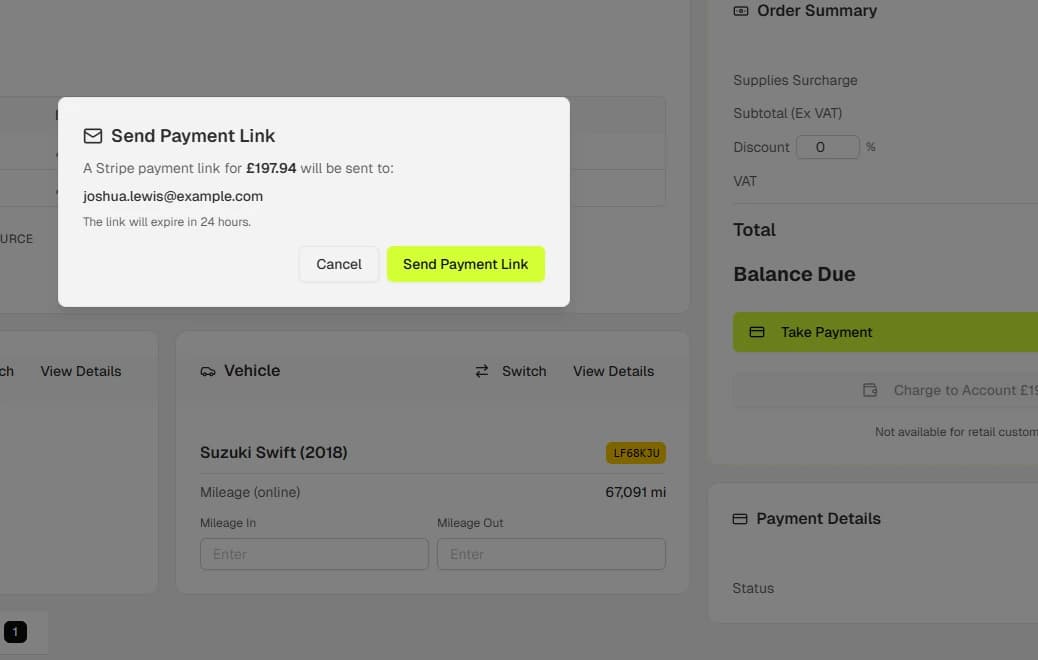
Buy now, pay later at checkout. Klarna and Clearpay appear as options on an online payment page, alongside card payment. Customers already know them from online shopping. They suit payment links, deposits and anything paid online rather than at the desk.
Plenty of garages offer more than one. Providers differ in how the instalments work, what they charge you and which customers they approve, so a customer one turns down may be accepted by another.
Which jobs it is for
You do not need finance on an oil change. It earns its place on large bills that nobody planned for:
- Cambelts, clutches and gearbox work
- MOT failures with several items on them
- A full set of tyres, or tyres plus alignment
- Red items on a health check that the customer wants to spread
- Big diagnostic-led repairs where the parts alone are a shock
Health checks are where finance helps most quietly. A customer told they need £900 of work will often pick the cheapest item and leave the rest. The same customer offered a monthly figure will often approve the lot. If you are already working hard on turning VHC advisories into booked work, finance gives the customer one more way to say yes.
Raise it before the work, not at the till
The worst time to mention finance is when the car is finished and the customer is at the counter with their card out. By then it cannot change the decision it was meant to help with, the decision to go ahead. And if the customer turns out to be declined, the car is finished, the parts are fitted and you are in an awkward conversation about how they will pay.
Mention it when the job is being authorised instead. If your provider lets you check eligibility before the work starts, use it. You find out whether finance is an option while there is still time to agree another way to pay, or to split the work.
How to talk about it at the counter
- Offer it to everyone above a set amount, the same way. If it is only offered to people who look like they are struggling, it feels like a judgement. Make it routine: every quote over your threshold mentions it.
- Lead with the outcome. “You can spread that over a few months if it helps” lands better than “do you want finance?”
- Never promise approval. The provider decides, so say “subject to approval”. Let the provider's own application and terms do the explaining: that wording is theirs to get right.
- Have a fallback. If the customer is declined or would rather not, do the safety-critical work now and book the rest for a later date, so it is not forgotten.
Keep it out of the office drawer
The alternative most garages fall back on is informal: “pay us when you can.” That makes you the lender, with no credit check, no agreement and somebody in the office chasing it. Proper finance moves that risk to a company whose job it is, and you are paid up front.
Record it properly too. Finance payments should go through as their own payment method, not lumped in with card or bank transfer. Then they reconcile cleanly with your accounts, and you can see how much of your work is paid for this way.
How it works in BOOKAR
In BOOKAR, finance is part of the work order, so the front desk never re-keys a payment or emails an invoice by hand:
- Payment Assist, connected to your own account. Paste the API key and secret from your Payment Assist account into Settings → Integrations, and BOOKAR checks them with Payment Assist before saving.
- An eligibility check from the work order. Before the work starts, ask Payment Assist whether the customer is likely to be accepted. It is not a loan and no money moves. The answer shows on the job as “Finance pre-approved” or “Finance declined”, and a decline is final for that customer at your location.
- Apply by text, email or QR code. When the work is done, pick a plan. The fee to you is shown for each plan, and only plans that cover the amount can be chosen. The application goes to the customer's phone, or they scan a code at the counter. The job shows “Finance pending” until they finish.
- Paid by itself. When Payment Assist confirm the customer's plan is set up, the payment is recorded against the job and the invoice is sent on to Payment Assist, so your money is not waiting on a forgotten email.
- Klarna and Clearpay through Stripe. Where you have them enabled on your own Stripe account, they appear as options on BOOKAR's online payments.
- Finance arranged elsewhere. A separate Finance payment method records finance you set up outside BOOKAR, so the money still lands in the right place.
Finance checked before the work, paid when the plan is set up
See how the Payment Assist integration works from the work order in BOOKAR.